Generative AI is reshaping biotechnology, but many researchers still grapple with technical barriers from configuring high-performance compute environments to managing secure data access. Genesis Workbench serves as a strategic tool that enables scientists and engineers to leverage advanced AI for drug discovery, predictive modeling, and single-cell analysis all within the Databricks platform.
Revolutionizing Drug Discovery and Biological Research
With the life sciences entering a new era of data-driven breakthroughs, foundational AI models are making tasks like protein structure prediction and molecular design dramatically more efficient. But practical challenges persist: data governance, intellectual property protection, workflow automation, and the need for interdisciplinary expertise. Genesis Workbench helps bridge these gaps, streamlining complex AI processes so researchers can focus on scientific discovery.
Key Features of Genesis Workbench
- Automated workflows for data processing and model training, reducing manual overhead
- GPU cluster orchestration that scales AI workloads efficiently
- Model serving and MLflow integration for seamless deployment and tracking
- User-friendly interface via Databricks Apps, accessible to both computational and experimental scientists
- NVIDIA BioNeMo integration for access to high-performance, pre-trained biological models
- Open-source extensibility so organizations can customize and expand the platform for future needs
By simplifying infrastructure and automating repetitive tasks, Genesis Workbench accelerates research and enables teams to innovate faster.
Advanced Modules and Capabilities
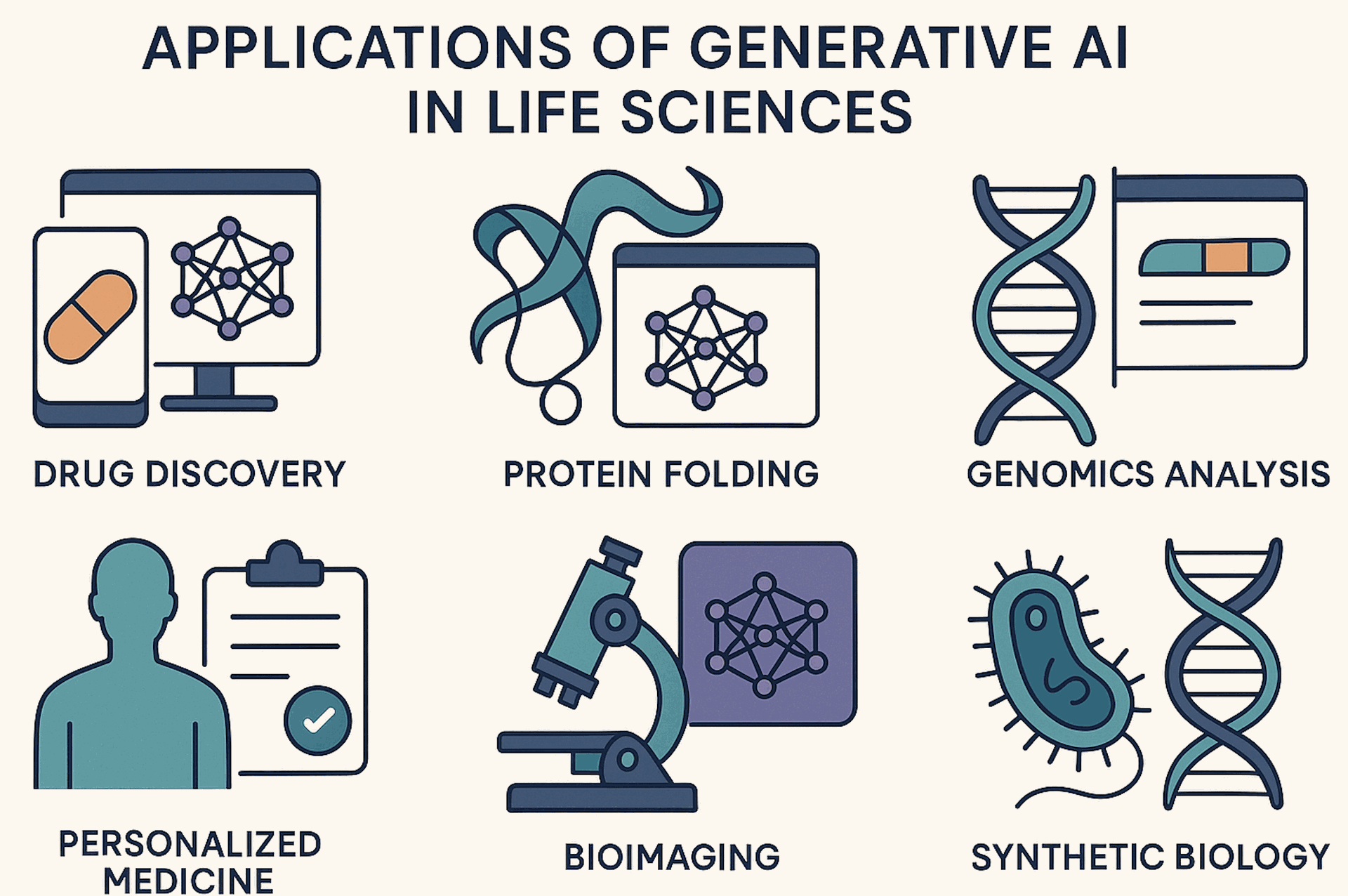
Image Credit: Databricks
Protein Folding and Design
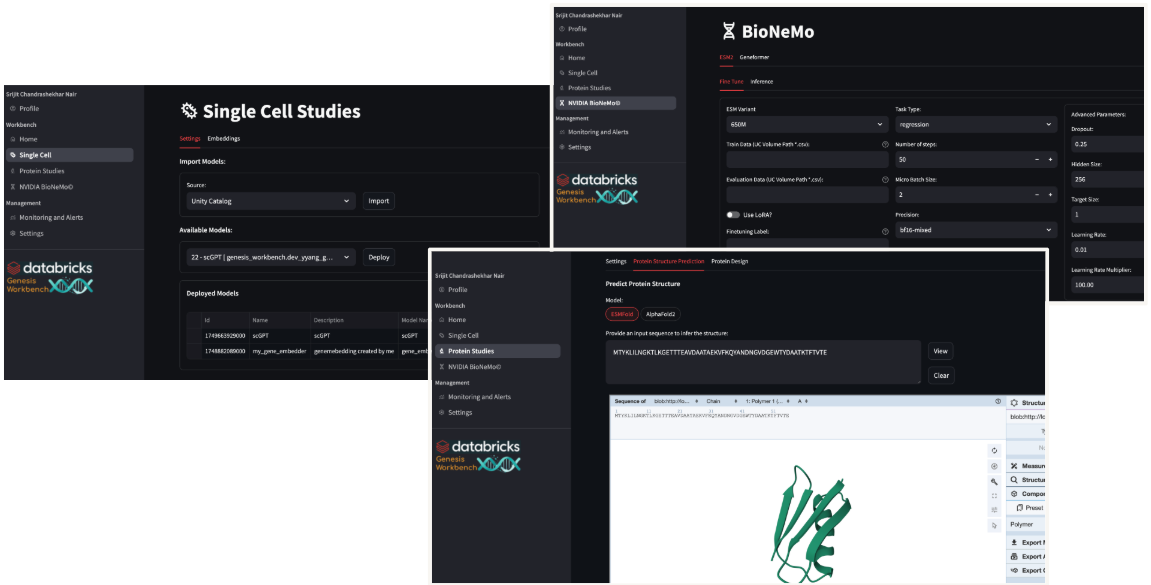
The platform includes leading protein modeling tools such as AlphaFold2, ESMFold, Boltz-1, RFdiffusion, and ProteinMPNN. These are wrapped as MLflow endpoints, cataloged for easy discovery, and accessible via APIs; allowing researchers to run protein prediction and design workflows without worrying about software dependencies or infrastructure setup.
Single-Cell Analysis
Genesis Workbench automates single-cell transcriptomics using scanpy and RAPIDS-singlecell, optimizing compute resources and ensuring all metrics are logged for reproducibility. The integration of AI models like SCimilarity and scGPT empowers users to query cell atlases, annotate data, and uncover biological mechanisms. Dashboards and visualization tools make data exploration and collaboration straightforward.
Integrated Governance and Cost Management
Security and compliance are built in. Unity Catalog enforces strict access controls over data, models, and applications, while monitoring tools provide transparency into job runs and expenses. Automated alerts and detailed usage breakdowns help organizations manage budgets and allocate resources efficiently.
Collaboration with NVIDIA: Scaling AI for Biology
Genesis Workbench's partnership with NVIDIA brings cutting-edge acceleration to life sciences. With BioNeMo, RAPIDS-singlecell, and Parabricks, researchers access GPU-optimized algorithms for genomics, biomolecular modeling, and single-cell analytics—enabling them to handle large-scale datasets with ease.
How to Get Started and What's Next
Genesis Workbench is open-source and easily installed from its GitHub repository via Databricks Asset Bundles. It ships with modules for protein studies, single-cell analysis, BioNeMo integration, and comprehensive monitoring. The project is under active development, with future plans to support more models, enhance performance, and address new research areas like spatial transcriptomics and real-time data processing.
A Unified Platform for AI-Driven Biology
Genesis Workbench is transforming how life sciences organizations adopt AI, combining ready-to-use models, strong governance, and scalable infrastructure. By making sophisticated biological modeling accessible to both computational experts and bench scientists, it accelerates innovation and sets the stage for the next generation of biotech breakthroughs on Databricks.
Source: Databricks Blog


Genesis Workbench: Empowering Life Sciences Innovation with Generative AI on Databricks