Want to build a billion-scale vector database in under an hour, all while slashing costs and minimizing manual effort? Well that’s now possible thanks to Amazon OpenSearch Service’s latest innovations: serverless GPU acceleration and auto-optimization for vector indexes.
These features are designed to empower developers, data scientists, and organizations to launch powerful AI-driven applications faster and more efficiently than ever before.
Key Innovations: Speed and Intelligence
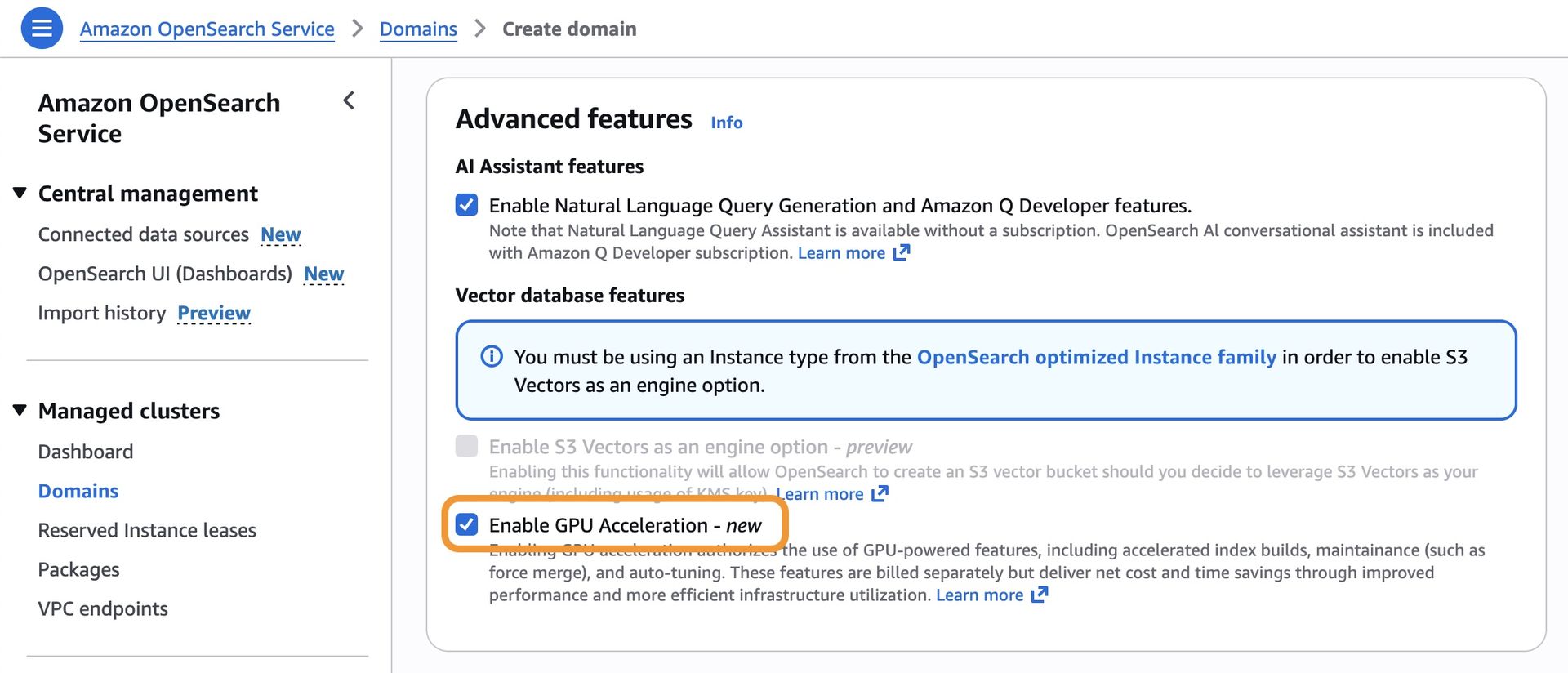
Amazon OpenSearch Service’s new capabilities focus on two pillars: acceleration and automation. With GPU acceleration, the service enables you to index vector data up to 10 times faster and at a fraction of traditional costs. This game-changing speed is achieved by leveraging GPUs instead of CPUs for compute-intensive tasks, making it possible to handle billions of vectors swiftly and economically.
On the automation side, auto-optimization takes the guesswork out of index tuning. OpenSearch now intelligently configures your vector indexes for the best trade-off between search quality, latency, and memory efficiency. You don’t need deep vector search expertise or hours of manual tuning,the system handles it, ensuring optimal performance and cost savings.
Inside GPU Acceleration
Activating GPU acceleration is straightforward, simply use the OpenSearch Service console or AWS CLI to enable the feature when creating or updating a domain or serverless collection. OpenSearch automatically allocates and manages GPU resources based on workload needs, so you only pay for what you use, and never for idle resources.
- GPU tasks are securely isolated within your Amazon VPC.
- Pricing is usage-based with OpenSearch Compute Units (OCUs), ensuring cost efficiency.
- Both indexing and force-merge operations benefit from acceleration.
Performance tests show speed improvements from 6.4x to nearly 14x, letting teams reduce operational costs and deliver new features to market much faster.
How Auto-Optimization Simplifies Indexing
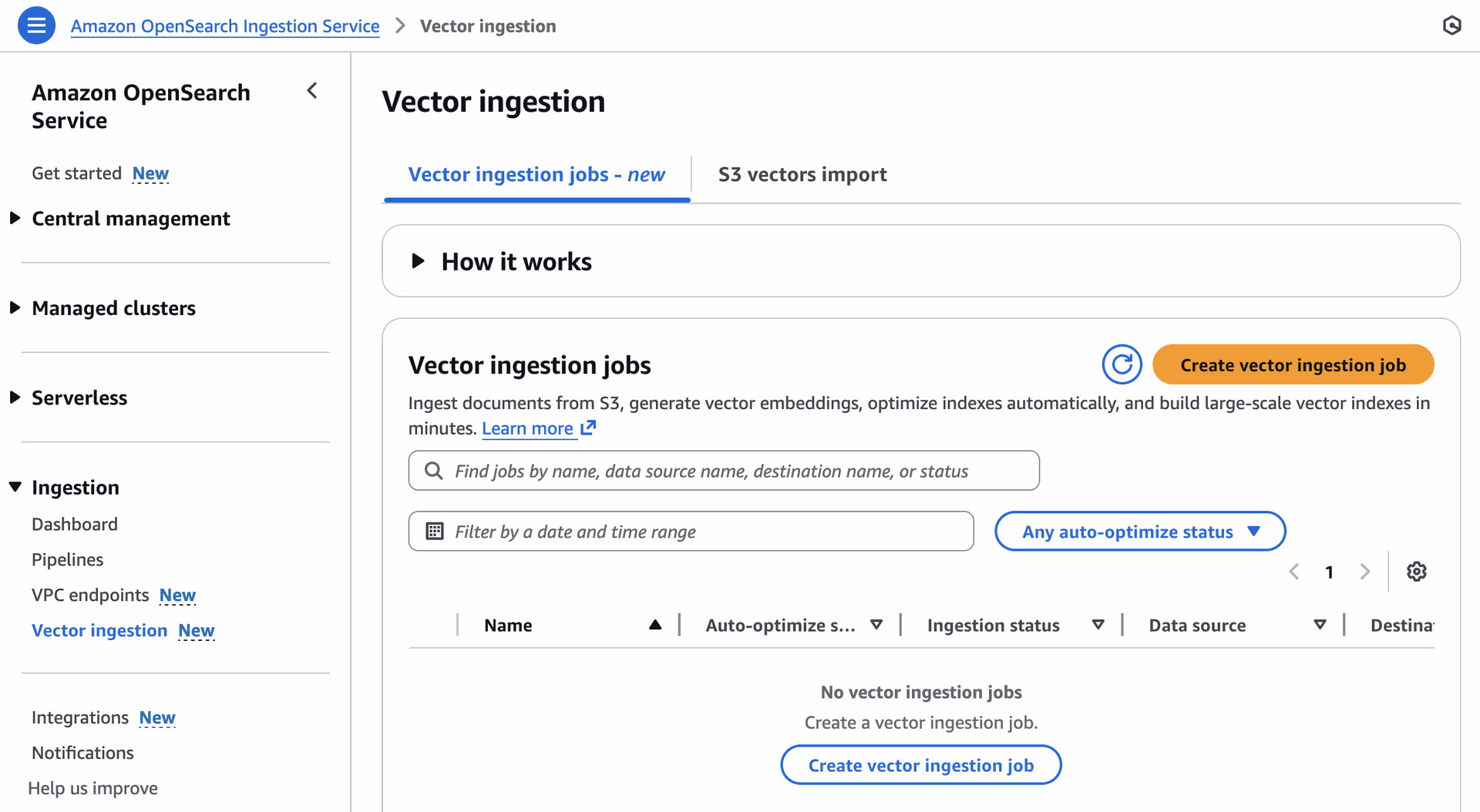
The vector ingestion feature lets you import data from Amazon S3, generate vector embeddings, and receive tailored index configuration suggestions. Auto-optimization recommends the best settings for your priorities, whether you need lightning-fast responses or high recall accuracy.
- Prepare and upload your dataset to S3, then select your OpenSearch destination.
- Decide between auto-optimized or manual vector field settings.
- Rapidly ingest and index data, harnessing GPU acceleration for up to 10x speed and lower costs.
You can specify your desired latency and recall during setup, and OpenSearch fine-tunes the index accordingly, making superior search quality accessible to more teams and projects.
Real-World Applications
These breakthroughs are especially valuable for projects involving generative AI, semantic search, and knowledge base indexing. By reducing technical and cost barriers, AWS enables organizations to deliver richer, AI-powered discovery and search experiences across their digital products and services.
Getting Started and Availability
Both GPU acceleration and auto-optimization are now available in key AWS regions across the US, Asia Pacific, and Europe. With simple pay-as-you-go pricing for OCUs, there’s no need for upfront hardware investments or complex infrastructure planning. To get started, visit the OpenSearch Service console, consult the GPU acceleration documentation, or read the auto-optimization guide. AWS invites users to provide feedback via AWS re:Post or standard support channels.
Conclusion
Amazon OpenSearch Service is redefining what’s possible for large-scale vector databases. By combining serverless GPU acceleration with intelligent auto-optimization, AWS makes high-performance vector search more accessible, powering the next wave of AI and search-driven innovation.
Source: AWS News Blog


How GPU Acceleration and Automation Transform Vector Databases in Amazon OpenSearch Service