Understanding the tumor microenvironment (TME) is a challenge in precision immunotherapy. Traditional techniques like multiplex immunofluorescence (mIF) offer spatial proteomics insights, but their high cost and scalability issues limit their broader impact.
The advent of GigaTIME, a multimodal AI platform from Microsoft Research, is shifting this paradigm by generating large-scale virtual populations for TME modeling, all from widely available digital pathology slides.
Key Innovations and Insights
- Spatially Detailed Analysis: GigaTIME predicts spatially resolved, single-cell protein states, providing deeper insight into immune-tumor interactions than prior models.
- Comprehensive Population Study: The approach enables insights across cancer types and subtypes, revealing new correlations between proteins, biomarkers, and immune signatures.
- Enhanced Patient Stratification: Using all 21 protein channels, GigaTIME's signature surpasses traditional single-protein methods in classifying patients by stage and survival, supporting more nuanced clinical decisions.
- Complex Interactions Unveiled: GigaTIME identifies intricate combinatorial and spatial patterns among proteins, linking them to key clinical outcomes,an achievement previously hindered by limited mIF data.
- Robust Validation: The high correlation between Providence and TCGA datasets (Spearman 0.88) affirms the robustness and generalizability of GigaTIME's findings.
Leveraging Digital Pathology and Advanced AI
GigaTIME capitalizes on the routine use of hematoxylin and eosin (H&E) stained slides in cancer diagnostics. By translating these slides into high-resolution virtual mIF images, GigaTIME democratizes access to spatial proteomics data. The AI was trained on an extensive dataset,40 million cells from Providence, paired across 21 protein channels.
This enabled researchers to create a virtual cohort of approximately 300,000 mIF images from over 14,000 cancer patients, encompassing 24 cancer types and more than 300 subtypes. Such breadth brings new clarity to TME studies at both the population and single-cell level.
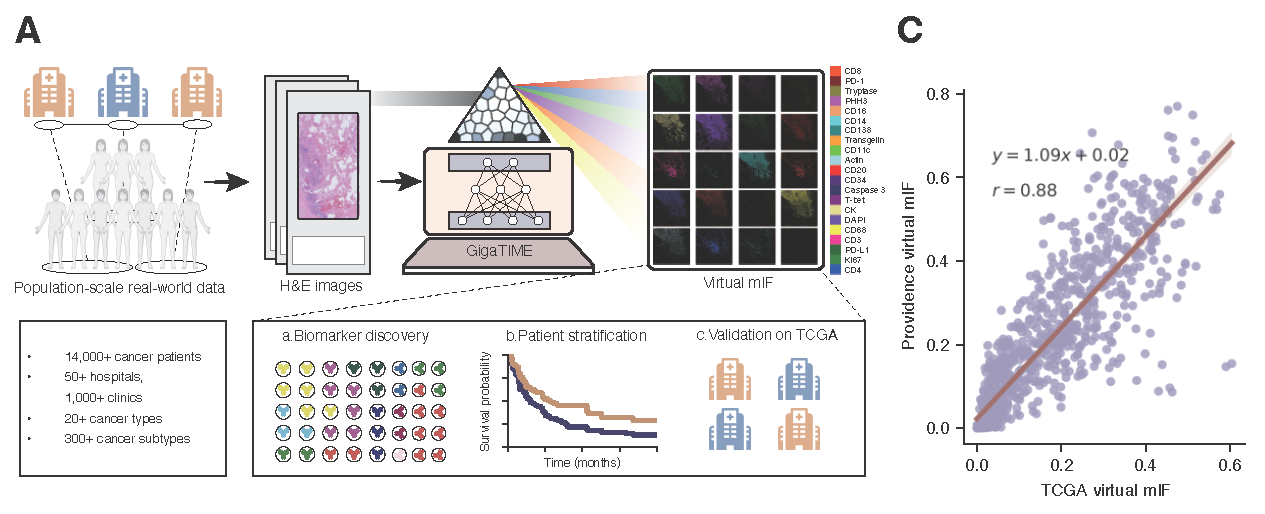
Figure 1. GigaTIME enables population-scale tumor immune microenvironment (TIME) analysis. Credit: Microsoft
Breakthroughs in Precision Oncology
The application of GigaTIME resulted in the discovery of 1,234 statistically significant associations between mIF protein activations and clinical outcomes, including biomarkers, cancer stages, and patient survival rates.
Importantly, these findings were externally validated with over 10,000 patient samples from The Cancer Genome Atlas (TCGA), underscoring the reliability and scalability of the virtual population strategy. This achievement marks the first population-scale spatial proteomics study of the tumor immune microenvironment (TIME), made possible only through GigaTIME's high-throughput virtual mIF data.
Toward Digital Twins and Broader Research Horizons
GigaTIME's impact extends beyond technical innovation. By enabling the creation of “virtual patients”, digital twins that simulate disease progression and treatment, GigaTIME is paving the way for real-world evidence generation and new research directions. This includes AI-powered image analysis and integration with other biomedical AI models, making precision oncology more accessible and effective.
Open Science and the Future of Multimodal AI in Health
Microsoft has made GigaTIME available through platforms like Foundry Labs and Hugging Face, encouraging collaboration and future enhancements. The model's flexibility supports the addition of new spatial modalities and integration with next-generation AI assistants. This initiative, in partnership with Providence and the University of Washington, reflects Microsoft’s larger commitment to open innovation in precision health, complementing projects such as GigaPath and BiomedCLIP.
Takeaway
GigaTIME demonstrates how multimodal AI can dismantle barriers in biomedical research. By transforming standard pathology slides into rich spatial proteomics datasets, it enables major advances in patient stratification, population-scale discovery, and the creation of virtual patients. Ultimately, GigaTIME is empowering a new era in precision oncology and tumor-immune research.
Source: Microsoft Research Blog


GigaTIME and Multimodal AI Are Transforming Tumor Microenvironment Modeling